

Itching, licking, recurring ear problems, and irritated skin can make pets uncomfortable, and allergies are often one possible cause. Bridge Veterinary Care evaluates cat and dog allergies at our Bay Shore, NY animal hospital to help identify what may be triggering your pet’s symptoms and determine an appropriate treatment plan.
Depending on your pet’s needs, allergy care may include treatments such as Cytopoint injections or immunotherapy. The goal is to manage the underlying problem rather than simply chasing the itch.
If your pet is licking, chewing, or scratching incessantly, allergies may be to blame. Schedule an appointment to find the cause.
What Do Allergies Look Like in Dogs and Cats?
Cat and dog allergies often show up through the skin rather than sneezing or watery eyes. Pets may scratch, lick, chew, or rub at irritated areas, and ongoing inflammation can sometimes contribute to secondary skin or ear infections.
Signs that may warrant a veterinary exam include:
-
Frequent scratching or licking
-
Red, irritated, or inflamed skin
-
Paw chewing
-
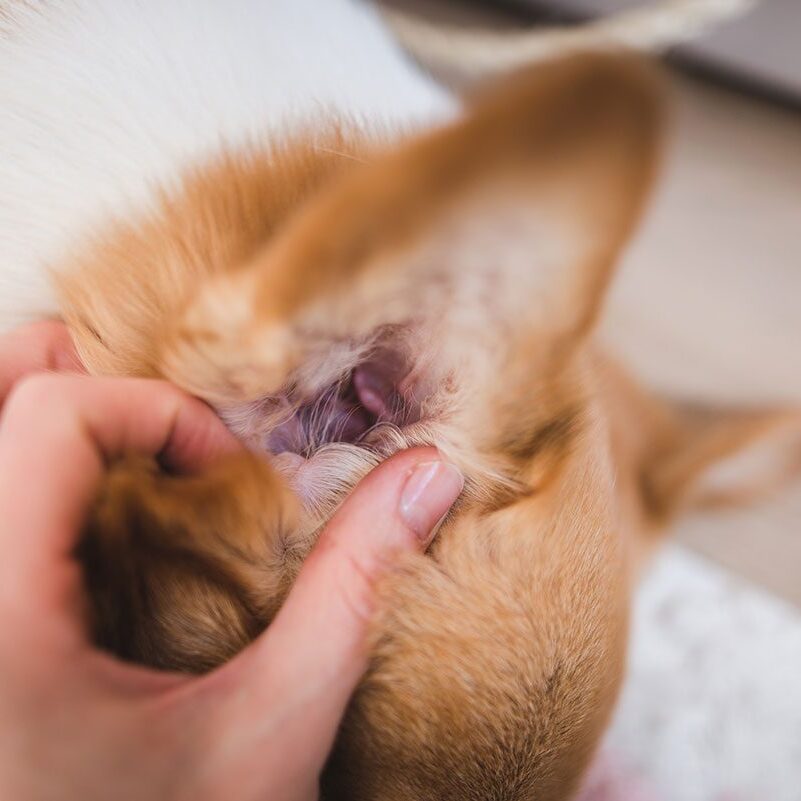
Recurrent ear irritation or infections
-
Hair loss or thinning
-
Scabs or sores
-
Persistent rubbing of the face
-
Skin changes that improve and then return
-
Ongoing itching without an obvious cause
What Can Cause Allergies in Dogs and Cats?
Dogs and cats can react to several types of allergens, and more than one trigger may be involved.
-
Environmental Allergies
Pollen, grasses, molds, dust mites, and other environmental allergens can trigger ongoing or seasonal itching. Some pets experience symptoms during certain times of year, while others are affected year-round.
-
Food Allergies
A food allergy occurs when the immune system reacts to an ingredient in the diet. Because food-related symptoms can resemble environmental allergies, determining whether diet is involved may require a structured veterinary evaluation.
-
Flea Allergies
Some pets are highly sensitive to flea bites. Even limited exposure can cause significant itching and skin irritation in an allergic pet, making effective flea prevention an important part of managing these cases.
How Are Pet Allergies Treated?
Allergy treatment depends on what is triggering your pet’s symptoms, how severe those symptoms are, and whether problems such as skin or ear infections are also present.
Treatment may include:
-
Targeted allergy medications in oral or injectable forms to help control itching and inflammation
-
Topical therapies such as medicated shampoos, mousses, wipes, or other skin treatments
-
Immunotherapy for pets with identified environmental allergies
-
Ear treatments when allergies contribute to recurring ear inflammation or infection
-
Flea prevention when flea allergy is suspected or needs to be ruled out
-
Diet trials or prescription food when food allergies are a concern
-
Treatment for secondary skin infections if bacteria or yeast are contributing to the irritation
Some pets need short-term treatment for an occasional flare, while others benefit from a longer-term management plan. Your veterinarian will recommend an approach based on your pet’s symptoms, history, and response to treatment.